
Lack of a maintenance culture is not a Ghanaian peculiarity. Every country has its fair share of challenges when it comes to maintaining public infrastructure. What distinguishes nations, however, is how effectively they manage, maintain and rehabilitate their assets before they deteriorate beyond repair.
In Ghana, it has unfortunately become almost trite to discuss our poor maintenance culture, particularly in relation to public buildings and infrastructure. There is no gainsaying the fact that this problem has been with us for decades, dating back to at least the early years after the overthrow of our first president.
One institution that has suffered the consequences of neglect, mismanagement and declining public confidence is the State Transport Company (STC) Limited.
STC was once the leading transport company in Ghana, providing the travelling public with safety, reliability, comfort and convenience. For many Ghanaians, travelling by STC was a preferred and trusted means of moving between the various parts of the country.
Today, however, the company is a shadow of its former self. Its share of the inter-city transport market has declined significantly, with private transport operators taking over much of the space it once dominated. Even more worrying is the condition of some of its facilities, particularly its yard and offices, which give the impression of an institution that has been abandoned to its fate.
Our concern today is not necessarily about how STC’s once-thriving business has been run down, but rather the deplorable condition of the building that houses the office of the Managing Director.
One would expect that whoever occupies such a position would be deeply concerned about the physical environment in which the company operates. Managing Directors come to work every day, pass through these facilities and occupy offices within them. Yet, too often, there appears to be little urgency to change the condition in which they find the institution.
This cannot be the standard we should accept.
We recall the transformation of the Ghana Publishing Company under a former appointee, who reportedly met the institution in a deplorable state but took steps to transform it into a modern facility capable of providing improved and efficient services. Today, the organisation is often cited as an example of what determined leadership can achieve when the head of an institution takes ownership of its transformation.
The same spirit must be brought to bear on STC.
The Managing Director must not simply inherit the condition of the company and leave it exactly as it was found. Leadership is about identifying problems, mobilising resources and finding solutions.
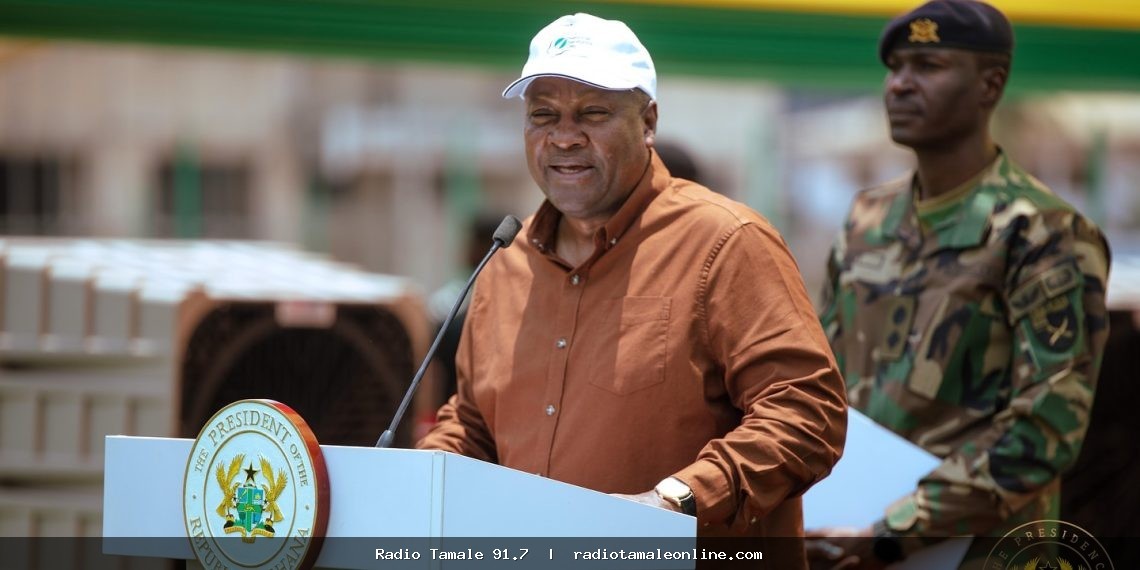
The company needs the kind of deliberate intervention, accountability and institutional renewal that President John Dramani Mahama has promised under his broader reset agenda. The reset must not only be about changing policies; it must also be about restoring institutions that have the potential to serve the Ghanaian people and contribute to the national economy.
We owe it to present and future generations to preserve the public assets entrusted to us. Not every state-owned institution must be allowed to run aground simply because it is government-owned.
Indeed, as President Mahama once asked in relation to GIHOC, how can an institution operating in a potentially profitable sector be allowed to consistently make losses?
The same question must be asked of STC.
A transport company with a long-established brand, nationwide presence and an important public-service mandate should not be allowed to deteriorate into an institution that passengers avoid.
The state must stop treating public infrastructure as expendable. Buildings must be maintained, buses must be serviced, facilities must be modernised and management must be held accountable for results.
STC was once a symbol of dependable public transportation in Ghana. With the right leadership and sustained investment, there is no reason it cannot reclaim that position.






0 Comments