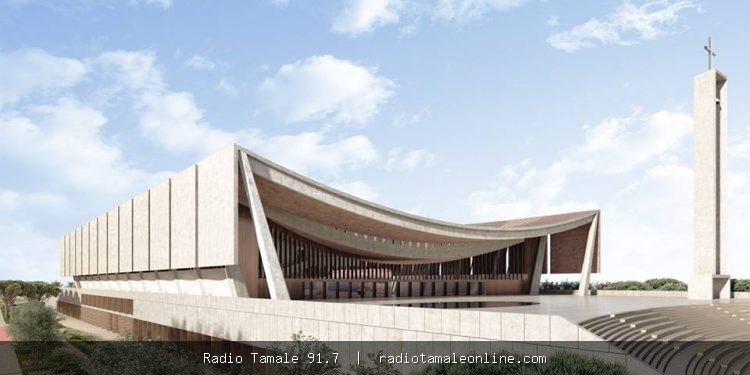
The Christian Council of Ghana has called on the government to set aside political differences over the National Cathedral and explore ways to revive the stalled project.
The Council’s General Secretary, Rev. Dr. Cyril Fayose, said Christians in Ghana, as well as international organisations and donor partners, remained willing to support the construction of the cathedral.
He, however, stressed that government backing would be crucial to getting the project back on track.
Rev. Dr. Fayose made the appeal during a courtesy visit to the newly sworn-in Minister for Local Government, Chieftaincy and Religious Affairs, Mahama Ayariga.
He urged the minister to help create the necessary conditions for the project to resume, arguing that the National Cathedral could serve as an important national religious and cultural institution.
His call comes amid prolonged controversy surrounding the project, particularly over its financing, management and the suitability of its original location.
“I have mentioned in other places that the Christians in Ghana are willing to support the building of the National Cathedral, as you rightly pointed out, and we also know of international organizations and donor partners who are willing to support building it.
“What we need is the blessing of the state. We take away all the politics surrounding the building of the National Cathedral. I think it can be done by the grace of God. We have a song that says that the work is the law, so it cannot fail.
“So because it’s the law, we are going to build it. So as you come to the seat, we pray that what you said at the altar you make it come to pass,” he said.
Mr Ayariga, for his part, said he supported the idea of establishing a National Cathedral but maintained that the original site selected for the project was inappropriate.
He said his opposition was largely driven by plans to demolish residential properties occupied by judges to make way for the cathedral.
Mr Ayariga said the location had been a concern from the beginning of the project and recalled that, while serving in Parliament as a member of the Minority, he opposed the proposed demolition of the judges’ residences.
“At the time that the initiative started, I was part of the minority in parliament that really felt that it wasn’t the right location and it wasn’t the right thing to demolish all the Houses of the judges,” he said.
He explained that the affected properties were occupied by senior judges, including Supreme Court and Court of Appeal judges.
“At that time, we had senior, you know, Superior Court judges, Supreme Court judges, Court of Appeal judges. Their residences were there,” Mr Ayariga said.
“And, you know, I sincerely thought it wasn’t the right thing to do.”








0 Comments