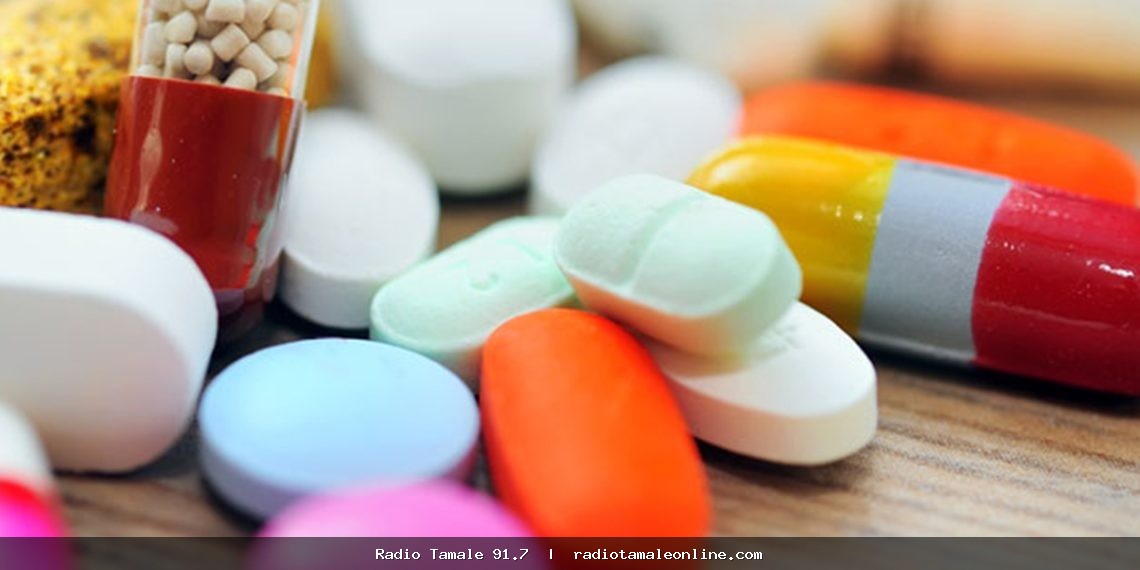
The government has launched the Ghana Pharmaceutical Manufacturing Policy to boost local drug production, attract investment and reduce the country’s reliance on imported medicines.
The policy also seeks to position Ghana as a pharmaceutical manufacturing and export hub for West Africa.
Speaking at the launch, Minister of Trade, Industry and Agribusiness Elizabeth Ofosu-Adjare said the initiative would create new investment opportunities and strengthen the local pharmaceutical industry.
“With this clear direction from the head of state, my ministry’s responsibility is to translate that commitment into factories, products, exports and jobs. The policy provides the framework for accelerating investments, promoting local manufacturing and improving the competitiveness of our industry.
“Our vision is simple: a Ghana that produces safe, quality and affordable medicines for its people and serves as the pharmaceutical manufacturing hub of West Africa,” she said.
The German Ambassador to Ghana, Frederik Landshöft, welcomed the policy, noting that Germany was working with Ghana to unlock trade opportunities.
“The COVID-19 pandemic reminded us how vulnerable countries become when essential medicines and vaccines are produced in only a few places. That is why Germany strongly welcomes Ghana’s ambition to become a regional pharmaceutical manufacturing hub,” he said.
Speaking on behalf of the President of the Ghana Pharmaceutical Manufacturers Association (GPMA), the association’s Executive Secretary, Dr. Lucia Addae, also welcomed the policy, expressing optimism about its potential to support local manufacturers.
She highlighted the country’s continued reliance on imported medicines, noting that the value of pharmaceutical imports had increased significantly over the past decade.
“We always hear that we import 70% and manufacture 30%, and people have stated that that figure has not changed over the years. Ten years ago, that figure was about $250 million. Today, that figure sits a little over $750 million,” she said.
The policy is expected to provide a framework for expanding domestic pharmaceutical production, attracting investment, and improving the competitiveness of Ghanaian manufacturers.
Its implementation will be critical to determining whether Ghana can increase local production, reduce its exposure to external supply disruptions and build a stronger pharmaceutical export industry.










0 Comments