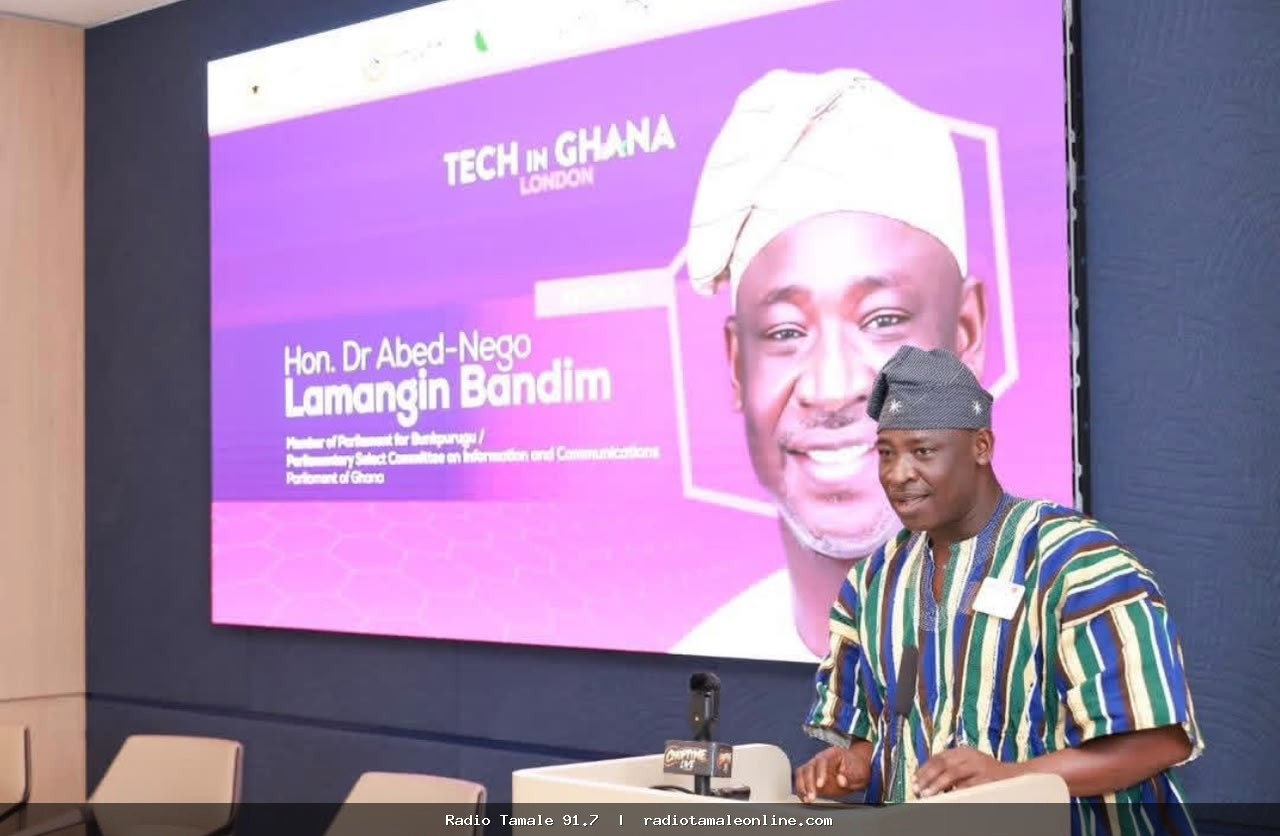
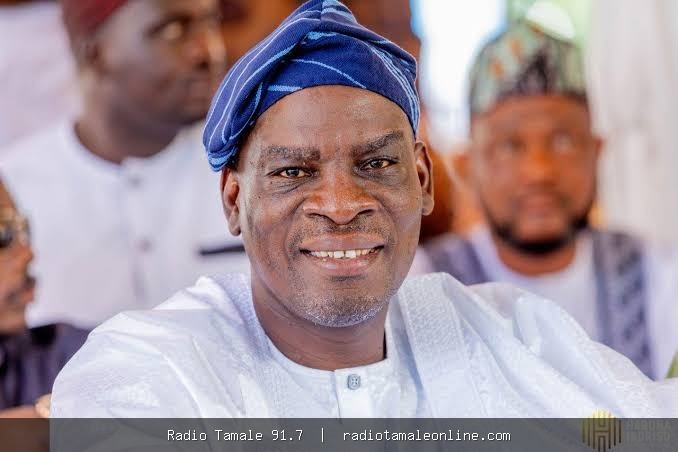
The Chairman of Parliament’s Committee on Information and Communications, Hon. Dr. Abednego Lamangin Bandim, has called for urgent measures to address frequent telecommunications network disruptions affecting parts of northern Ghana.
Dr. Bandim expressed particular concern about recurring interruptions to the MTN network, saying the frequency and duration of the outages, coupled with inadequate communication to affected consumers, require immediate attention.
In a statement issued on September 27, 2026, the Chairman said he personally experienced a major disruption while travelling from Salaga to Tamale on Saturday, September 26. According to him, the network went off at about 11:00 a.m. and was not restored until around 6:00 p.m.
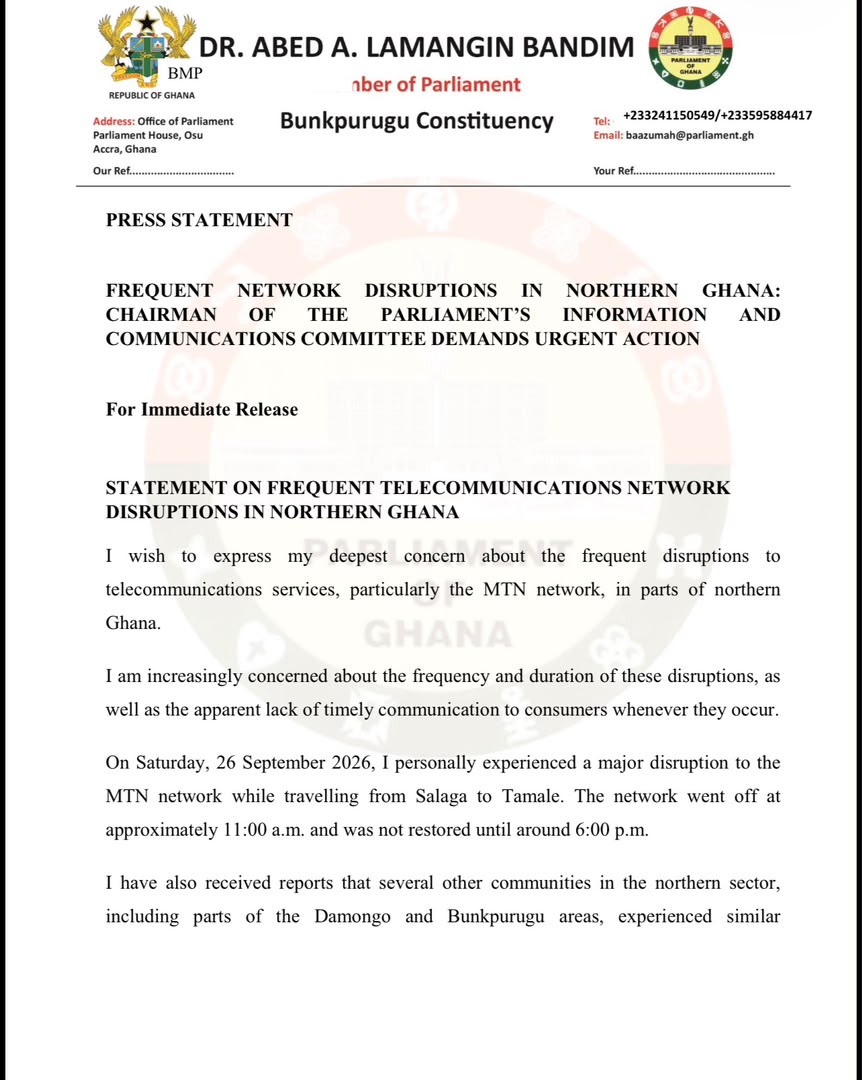
He added that he had received reports of similar disruptions in several communities in the northern sector, including parts of the Damongo and Bunkpurugu areas, with another disruption reportedly occurring the morning of September 27.
While acknowledging that telecommunications operators may encounter unforeseen technical challenges, including fibre cuts and infrastructure-related faults, Dr. Bandim said such challenges should not prevent operators from communicating promptly with affected consumers.
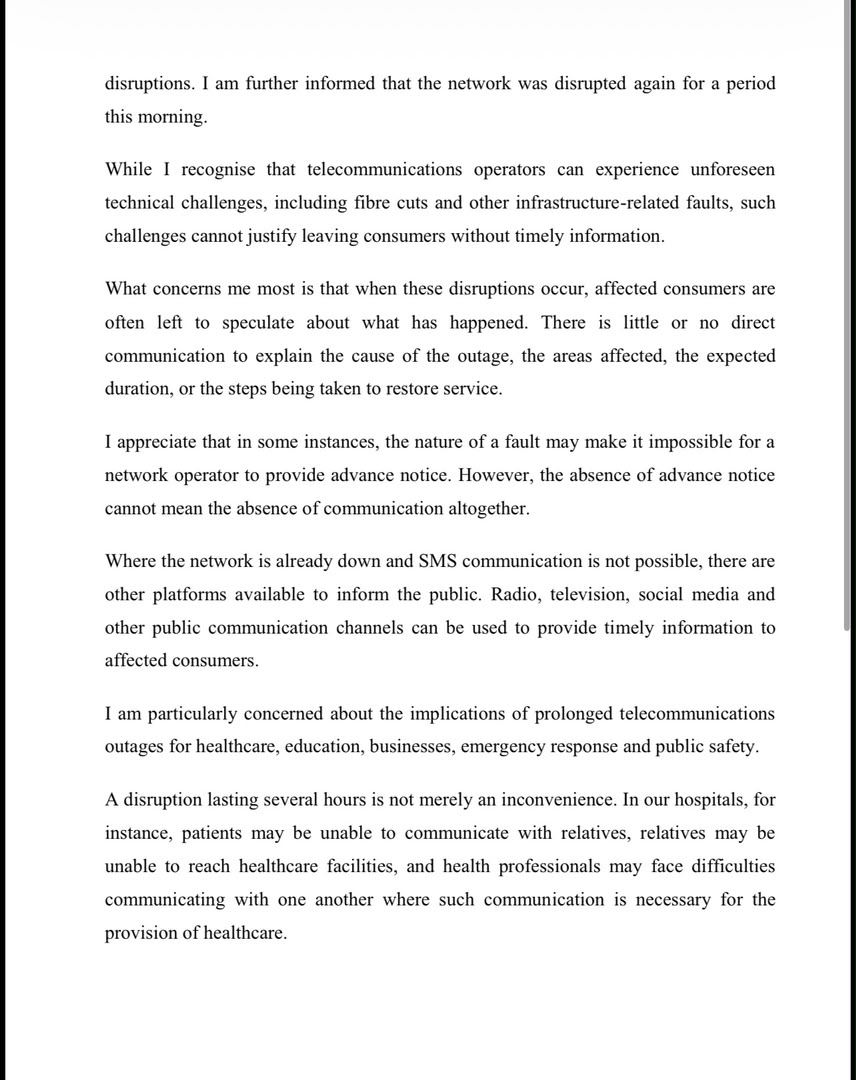
He said consumers are often left to speculate about the cause of outages, the areas affected, how long the disruption is expected to last and what measures are being taken to restore services.
The Chairman stressed that even when advance notice is impossible, network operators should communicate with the public once an outage occurs.
He suggested the use of radio, television, social media and other public communication platforms to provide timely updates, particularly in situations where SMS communication is unavailable because the network itself is down.
Dr. Bandim also highlighted the wider implications of prolonged telecommunications outages for healthcare, education, businesses, emergency response and public safety.
He noted that disruptions lasting several hours could affect communication between patients, relatives and healthcare facilities, while health professionals may also experience difficulties communicating when such communication is necessary for healthcare delivery.
He further said students and researchers who rely on internet connectivity for educational materials, research and communication with their institutions could also be seriously affected.
According to him, businesses, financial transactions, transportation, media operations and ordinary citizens increasingly depend on reliable telecommunications services, making extended network outages more than a mere inconvenience.
The Parliamentary Committee Chairman has therefore called on MTN Ghana to strengthen its communication protocols and ensure that consumers are promptly informed whenever major network outages occur.
He also urged the National Communications Authority (NCA) to pay particular attention to the frequency and duration of telecommunications disruptions in northern Ghana and ensure that service providers meet their obligations to consumers.
Dr. Bandim further called on telecommunications operators to establish effective contingency communication arrangements that would enable them to communicate with affected communities through alternative platforms whenever the network is unavailable.
He said he would continue to monitor the situation and engage relevant stakeholders to better understand the causes of the recurring disruptions and the measures being implemented to prevent them.
Dr. Bandim maintained that communities should not repeatedly be disconnected from essential communication services and subsequently left without meaningful explanations.
He described reliable telecommunications services as essential to healthcare, education, commerce, emergency response and everyday life, and urged MTN Ghana and the relevant regulatory authorities to treat the matter with urgency, particularly in northern Ghana.
Report By: Robicon Mornahson






0 Comments