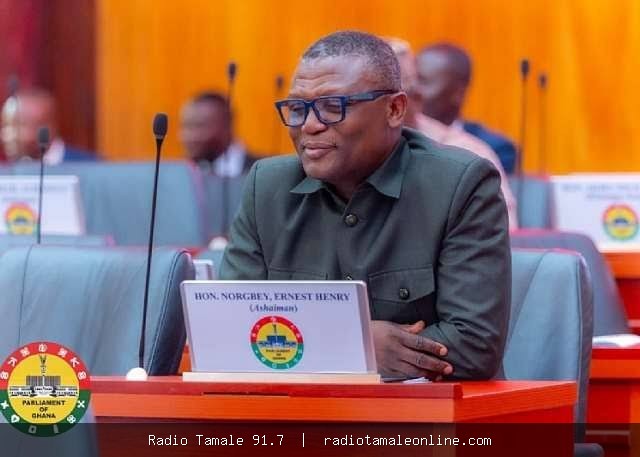
Parliament’s scrutiny of the 2023 African Games accounts has shifted from broad concerns about the cost of the event to a closer examination of who can explain specific payments, with sports and recreation minister Kofi Adams saying a verification exercise has produced findings that require further attention.
The committee probing expenditure on Ghana’s hosting of the continental event questioned the sports minister and former local organizing committee executive chairman Dr. Kwaku Ofosu-Asare over the financial report, procurement arrangements and entries that have raised concern since the auditor-general’s forensic audit was made public.
Mr. Adams told the committee that the ongoing verification work had produced “interesting results,” but stopped short of detailing the outcomes during the sitting. His remarks suggested that government’s review of the records is continuing alongside Parliament’s inquiry.
The hearing came against the backdrop of a forensic audit that identified GH¢580.04 million in financial irregularities linked to the Games. The report recommended recoveries and possible sanctions involving some officials connected to the organisation and supervision of the event, including former sports minister Mustapha Ussif, former chief director William Kartey and Dr. Ofosu-Asare.
One of the clearest exchanges centred on three media-related figures in the LOC report.
MPs referred Dr. Ofosu-Asare to separate allocations of GH¢200,000 for media engagement programmes, GH¢207,000 for media activities and GH¢700,000 for media resources. The three items total GH¢1.107 million.
The committee wanted to know what distinguished the allocations, why they were recorded separately and what work or materials were covered under each heading.
Dr. Ofosu-Asare said the explanation should come from the official who headed the media and protocol committee, rather than from him. He told MPs that the LOC had been organized around specialized portfolios and that each head was expected to account for the activities under his or her responsibility.
“If they all have been present, this question would have gone directly to him, so I’ll plead that this question is reserved for him,” Dr. Ofosu-Asare said.
His position did not immediately satisfy members of the committee. MPs noted that the report being reviewed was presented under his authority and carried his signature, arguing that an executive chairman could not fully detach himself from expenditure recorded in an official LOC document.
The exchange exposed a key issue likely to run through the inquiry: whether accountability should rest principally with individual portfolio heads or with the senior officials who led and approved the work of the entire organizing committee.
Another important point from the hearing was the distinction drawn between the LOC and the ministry of sports over procurement.
Mr. Adams and Dr. Ofosu-Asare indicated that the Ministry, rather than the LOC, handled procurement for the Games. That assertion could become central as the committee assesses the chain of approval for contracts and payments made during preparations for the event.
The committee’s examination covers spending on preparations, logistics, infrastructure and other activities tied to Ghana’s staging of the 13th African Games.
For MPs, identifying the exact institution and officers responsible for procurement is necessary before responsibility can be assigned for any breaches, questionable payments or weak supporting documentation identified in the audit.
The current sports minister’s comments also place increased attention on officials who served under the previous administration, particularly those at the ministry when the Games were being planned and delivered.
Former sports minister Mustapha Ussif is expected to appear before Parliament’s youth and sports committee to answer questions arising from the expenditure probe. His testimony is expected to provide the committee with an opportunity to test the claim that procurement decisions were driven by the ministry rather than the LOC.
The committee is expected to hear from other departmental and portfolio heads associated with the Games, including officials who may be better placed to explain individual expenditure lines.
However, the process may face practical delays after concerns were raised that some officials linked to the LOC were outside Ghana and may not be immediately available to appear before the committee.
That could slow the committee’s effort to match amounts in the financial report with the officers who initiated, authorized or implemented the related activities.
Still, the hearing made clear that Parliament is not treating the matter as a routine post-event review. The committee is seeking documentary explanations for how public funds were spent, who exercised oversight and whether the structures created for the African Games provided adequate controls.
For Dr. Ofosu-Asare, the immediate challenge will be to convince the committee, that the LOC’s portfolio arrangement did not weaken executive supervision. For the ministry of sports, the challenge will be to account for its role in procurement at a time when the audit has placed the Games’ finances under intense public scrutiny.
The questions are likely to grow more detailed when the committee reconvenes: not only how much was spent, but what was supplied, who approved each transaction and whether records exist to support every cedi recorded in the accounts.







0 Comments