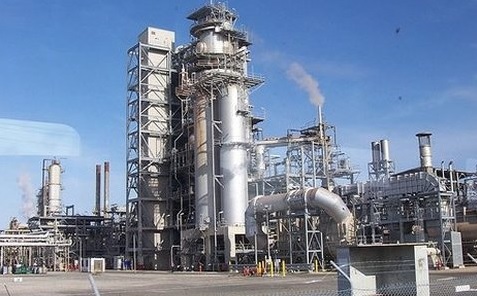
Ben Boakye, Executive Director of the Africa Centre for Energy Policy (ACEP), has called on government and industry to incentivise in-country fuel storage and strategic reserves to cushion Ghana’s economy from shocks like recent international conflicts and rising pump prices.
Speaking on the Joy Super Morning Show amid significant hikes in local fuel prices, with petrol now selling at around GH¢13.30 per litre and diesel at GH¢17.10 per litre at major stations, Boakye stressed that Ghana’s current stock levels may not be sufficient to withstand prolonged import disruptions.
“We are over-tanked, but we don’t have enough products at all times,” he said, arguing that while private depots can hold three to four weeks’ cover depending on local production and imports, the country still lacks a reliable strategic buffer.
Fuel prices in Ghana have surged sharply in recent weeks following revisions to the National Petroleum Authority’s (NPA) pricing floors for the April 1–15 window, a move linked to global crude price volatility and cedi depreciation.
The price floor changes have set petrol and diesel at their highest benchmark levels in recent memory, a trend industry watchers partly attribute to uncertainty caused by geopolitical tensions in the Middle East involving the United States, Israel, and Iran.
Under current pricing rules, international crude price movements tend to be passed through to local consumers unless the government intervenes. That makes stable supply and stockpiles a key buffer against sudden global shocks.
Boakye urged policymakers to create incentives that would encourage private sector players, including Bulk Distribution and Export Companies (BIDECs) and Oil Marketing Companies (OMCs), to stock more fuel domestically rather than offshoring it to nearby markets such as Togo, where storage has been attractive due to cost structures. (Facebook
He suggested that part of any incentive regime could involve requiring that a proportion of annual trade, for example, 10% of activity by Bulk Distribution Companies (BDCs), be held as part of a buffer for the national economy.
“Encouraging the private sector to store products in the country, through reduced charges and incentives, provides a buffer for us when we have hard times,” Boakye said.
His comments came in response to questions about Ghana’s strategic fuel stocks and the country’s resilience should imports be interrupted for an extended period.
While Ghana currently relies heavily on imports for refined products, the absence of substantial reserves could leave it exposed to supply shocks if foreign shipments are halted or delayed.







0 Comments