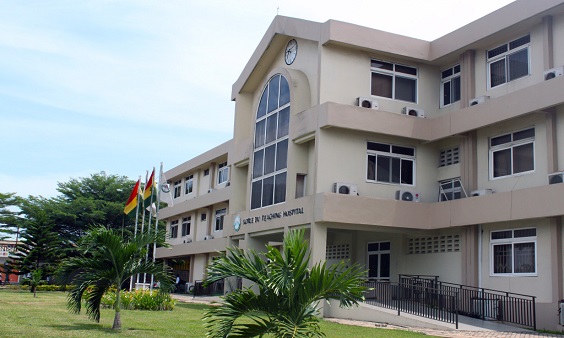
The Korle Bu Doctors Association (KODA) has raised serious concerns over worsening conditions at the Accident and Emergency Centre of the Korle Bu Teaching Hospital, warning that overcrowding is putting both patients and healthcare workers at risk.
In a press statement dated March 23, 2026, the Association said recent administrative directives have led to a surge in patient admissions that far exceeds the facility’s physical and human resource capacity.
While reaffirming their commitment to the “No Bed” policy, where no patient is turned away, the doctors indicated that the resulting congestion has forced care to be delivered under unsafe and improvised conditions.
“This status quo is unsustainable and poses significant risks to both patient recovery and professional integrity,” the statement noted.
KODA outlined several critical challenges arising from the situation, including compromised patient safety due to delays in treatment and increased risk of medical errors.
It also highlighted medico-legal risks, explaining that treating patients on floors, in chairs, or hallways exposes healthcare professionals to potential legal consequences in the event of adverse outcomes.
“Providing emergency care on the floor, in chairs, or in hallways places doctors at immense legal risk,” the Association stated.
Additionally, the group pointed to the physical and mental toll on healthcare workers, citing burnout and exhaustion as growing concerns that could further impact the quality of care.
The doctors also revealed that the current conditions pose occupational hazards, including long-term spinal injuries from repeatedly bending or squatting to attend to patients on the floor.
KODA further addressed a recent visit by the Minister of Health to the facility, suggesting that the conditions observed during the visit did not reflect the everyday reality at the emergency unit.
According to the Association, preparations ahead of the visit may have temporarily altered the usual state of the facility.
“The environment on the day of the minister’s visit was not a reflection of what actually happens daily at the emergency,” the statement explained.
The group emphasised that the “No Bed Syndrome” goes beyond the mere availability of beds, noting that additional beds alone would not resolve the crisis without corresponding increases in staffing and resources.
“The provision of 1000 extra beds would not immediately translate into enough health personnel to take care of these patients,” it stated.
KODA also identified systemic issues within the broader healthcare system, particularly the inability of lower-level facilities to manage cases, leading to excessive referrals to Korle Bu.
“The bigger problem revolves around the capacity of other hospitals that are referring these patients… any number of beds provided in Korle Bu would be filled up in no time,” the statement added.
The Association is therefore calling for a more comprehensive, system-wide approach to addressing the crisis, including improved coordination across healthcare facilities and investment in capacity at all levels of care.










0 Comments