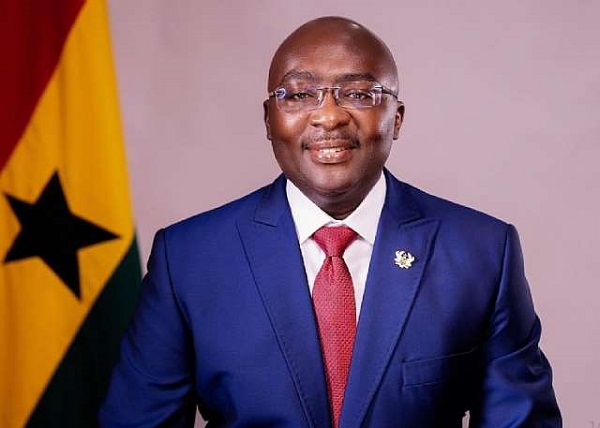
The Member of Parliament for Ofoase-Ayirebi and Ranking Member on Parliament’s Economy and Development Committee, Kojo Oppong Nkrumah, has revealed that Minority MPs have been instructed by the New Patriotic Party’s 2028 flagbearer, Mahamudu Bawumia, to intensify engagements with key stakeholders across the country in a bid to shape policy alternatives and strengthen advocacy in Parliament.
Addressing members of the Ghana Union of Traders’ Associations (GUTA), Oppong Nkrumah explained that the ongoing consultations with various groups—including traders, farmers, and industry players—are part of a broader strategy directed by Dr. Bawumia to better understand the concerns of Ghanaians and reflect them in parliamentary debates and policy proposals.
“In the coming months, Ghanaians will see us engage with other identifiable groups with a view to better understanding their feedback and demands of government,” he said, adding that the exercise is intended to deepen the Minority’s advocacy efforts in Parliament on behalf of citizens.
According to him, the engagements are already underway nationwide, with some Members of Parliament over the weekend stormed the Ashanti Region to engage the cocoa farmers to interact directly with producers and gather firsthand insights into challenges within key sectors of the economy.
Policy Alternatives And Economic Critique
The Ranking Member on the Economy and Development Committee in Parliament, Kojo Oppong Nkrumah indicated that beyond consultations, the Minority is also developing and presenting alternative policy proposals to address what he described as gaps in the government’s economic management approach.
Central to his critique is what he called a “mismatch” between official economic indicators and the realities experienced by businesses and households.
He argued that while the government continues to highlight improved macroeconomic indicators—particularly inflation—the methods used to achieve these outcomes must be carefully examined for sustainability.
“You need to examine the method with which the results are achieved and ask yourself whether it is sustainable and appropriate,” he noted.
Inflation, Liquidity And Cost Pressures
Touching on inflation, the Ofoase-Ayirebi MP reiterated concerns that the recent decline in inflation has largely been driven by tight monetary policies, particularly the sterilisation of liquidity by the Bank of Ghana.
He disclosed that in 2025 alone, approximately GH¢62 billion was mopped up from the economy in what he described as a “shock approach” to reducing inflation to about 3.3 percent, a move he said has significantly reduced money in circulation.
“When people don’t have money in their pockets, they cannot demand goods and services, and that is what brings prices down,” he explained.
However, he cautioned that such measures do not address the underlying drivers of inflation, particularly rising production costs.
He pointed to increases in electricity tariffs, levies, and other input costs—some rising by over 100 percent—as factors continuing to put pressure on businesses.
“The sterilisation removes money from the system, but it hasn’t dealt with the cost of production,” he stressed.
Concerns Over Credit And Private Sector Growth
Kojo Oppong Nkrumah further raised concerns about limited access to credit for the private sector, despite reductions in the policy rate.
According to him, banks appear to be lending more to the government than to businesses, a trend he described as a “mismatch” that undermines economic growth.
“It is not just about reducing the policy rate; the volume of credit to the private sector must also increase,” he said.
He argued that without sufficient financing, businesses will struggle to expand, invest, and create jobs, thereby weakening the broader economy.
Currency Interventions And Local Production
On exchange rate developments, Mr. Oppong Nkrumah accused the government of heavily intervening in the foreign exchange market by injecting large volumes of dollars into the system—estimated at $10 billion in 2025—to stabilise the cedi.
While acknowledging that such interventions may provide short-term stability, he questioned their long-term impact, particularly on local production.
“If the economy were allowed to find its natural level, local production would become more competitive compared to imports,” he argued, warning that heavy dollar injections effectively subsidise imports and undermine domestic industries.
He cited examples from agriculture, including rice, maize, yams, and cocoa farmers, who are struggling to sell their produce despite having large stockpiles, largely due to weak demand and market distortions.
Alternative Policy Proposals
Kojo Oppong Nkrumah said the Minority has consistently presented alternative approaches, including strengthening industrialisation initiatives such as the One District, One Factory (1D1F) programme, rather than replacing them with new policies that may deviate from their original purpose.
He also referenced concerns raised by the Minority regarding the Gold Board framework, cautioning against combining regulatory and commercial roles, which he said could lead to financial inefficiencies and losses.
Additionally, he noted that the Minority has proposed amendments to key legislative frameworks, including the Bank of Ghana Act and the Value for Money legislation, to improve transparency and accountability.
Concerns Over Consultation and Tax Measures
Oppong Nkrumah also questioned the level of stakeholder consultation on recent tax measures, particularly the implementation of a 20 percent VAT-related policy, which traders say has placed additional burdens on businesses.
He described it as “shocking” that some stakeholders claimed they were not adequately consulted, despite assurances given to Parliament during committee proceedings.
“There is a disconnect and mismatch between the promises and what is being delivered,” he said, urging stakeholder groups like GUTA to share their positions with the Minority to enable more effective representation in Parliament.
Strengthening Advocacy Through Engagement
The MP concluded by assuring stakeholders that the Minority’s engagement drive will be continuous and not a one-off exercise.
He emphasised that feedback gathered from these consultations will directly inform their parliamentary advocacy and policy proposals.
For the Minority, he noted, the goal is to ensure that economic policies are not only data-driven but also grounded in the real experiences of businesses, farmers, and ordinary Ghanaians.
Source: Asaase Radio

0 Comments