
A development economist, Fred Dzanku, has cautioned that Ghana’s economy, while showing signs of stabilisation, cannot yet be described as resilient, urging policymakers and the public to avoid complacency.
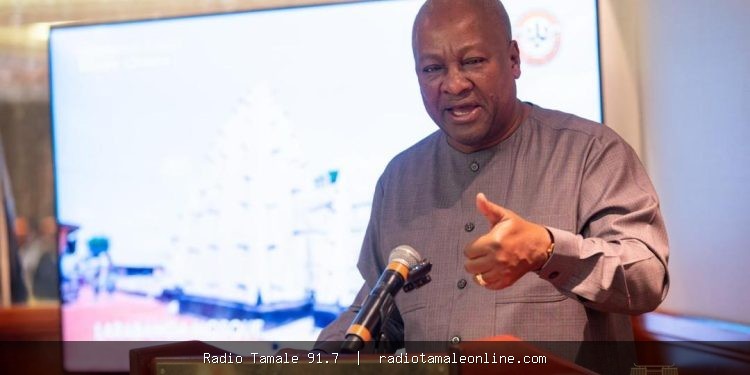
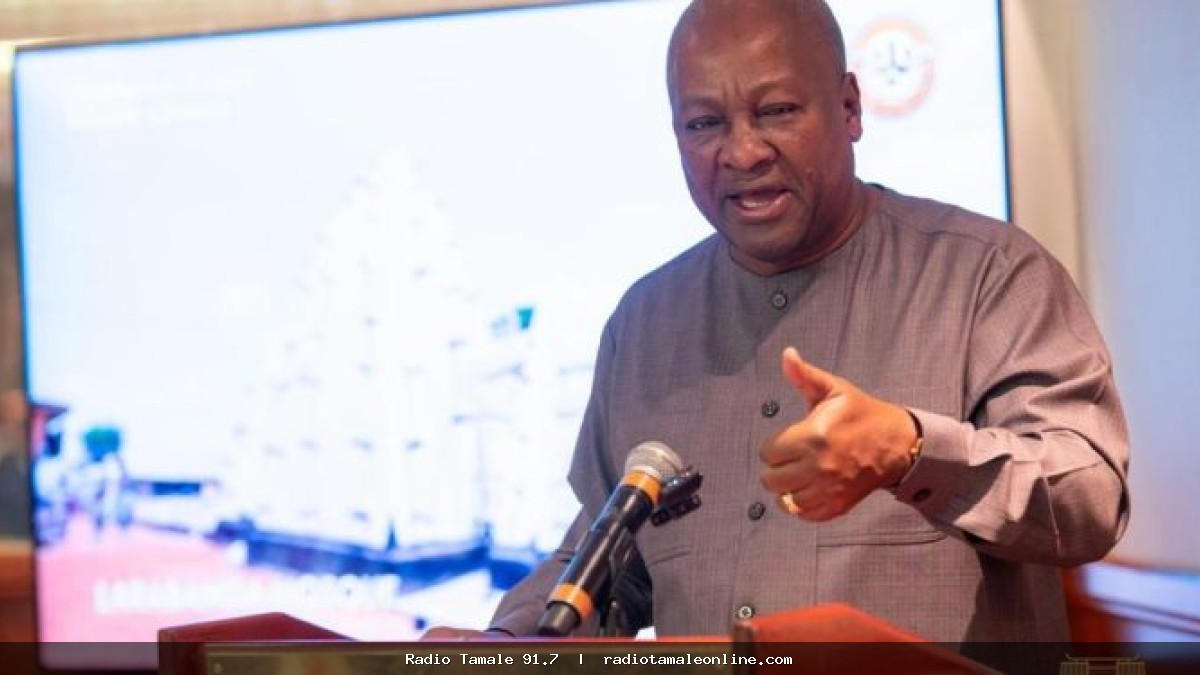
Speaking on JoyNews' Newsfile on Saturday, March 21, Prof. Dzanku offered a nuanced assessment of recent remarks by President John Dramani Mahama, who has argued that the country’s economy is now more resilient than in previous years.
According to Prof. Dzanku, resilience in economic terms refers to the ability of a system to absorb shocks without triggering significant volatility in critical indicators such as inflation, exchange rates, and economic growth.
“If an economy is resilient, it should be able to withstand shocks without large swings,” he explained, stressing that resilience is not a short-term achievement but a long-term structural outcome.
He outlined three principal benchmarks used to evaluate resilience: shock absorption capacity, transmission mechanisms, and the strength of macroeconomic buffers.
On shock absorption capacity, Prof. Dzanku acknowledged that Ghana has made some progress, particularly with regard to foreign exchange reserves.
“The data shows that we are in a better position than we were a couple of years ago,” he noted, adding that improved reserves and relatively strong gold performance provide a degree of cushioning against external shocks.
However, he raised serious concerns about Ghana’s fiscal space, which he described as a critical weakness. The country’s tax-to-GDP ratio, hovering around 15 per cent, remains persistently low.
“What this means is that the economy is not generating enough revenue,” he said. “Even if reserves are looking relatively healthy, weak fiscal space undermines overall resilience.”
He warned that limited revenue mobilisation constrains the government’s ability to respond effectively to economic shocks, thereby exposing the country to prolonged vulnerabilities.
Prof. Dzanku also highlighted the speed at which external shocks, particularly changes in global oil prices, are transmitted into the domestic economy.
Drawing on empirical analysis, he explained that a 10 per cent rise in fuel prices can lead to a roughly 6 per cent increase in food inflation within two months. This rapid pass-through effect, he argued, is indicative of weak economic fundamentals.
“When fundamentals are weak, shocks transmit very quickly,” he said. “That is a sign of vulnerability within the system.”
Such dynamics, he noted, have direct consequences for households, as rising transport costs quickly translate into higher food prices.
While acknowledging recent improvements, Prof. Dzanku stressed that stabilisation should not be conflated with resilience.
“I would say Ghana’s economy is stabilising,” he remarked. “But I wouldn’t say it is resilient yet. Resilience is something that is built into the system over time.”
He explained that true resilience requires sustained policy discipline, stronger institutions, and robust fiscal buffers developed over the long term.
Prof. Dzanku agreed that Ghana’s current economic standing represents an improvement compared to earlier difficulties.
“The President is not wrong in comparing where we are now to where we were some time ago,” he said.
However, he issued a clear warning: “It does not mean we are safe.”
According to the economist, while some buffers—such as reserves—are improving, others, particularly fiscal capacity, remain fragile.
As a result, Ghana must continue to pursue structural reforms and prudent economic management if it is to achieve genuine resilience.
For now, he suggested, the country remains in a transitional phase—moving from instability towards stability, but still short of the resilience needed to withstand future shocks.



0 Comments