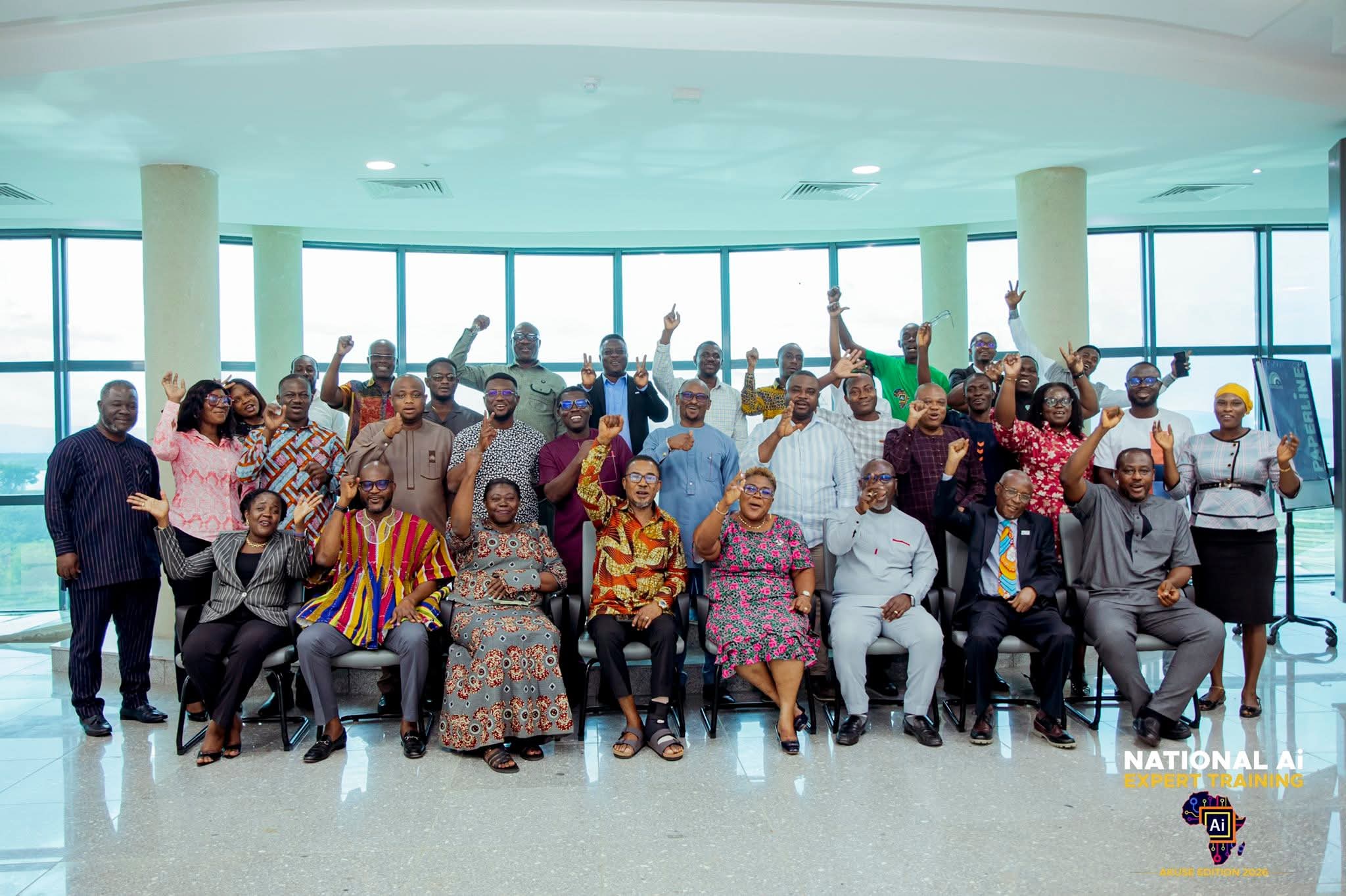
The Ministry of Communication, Digital Technology and Innovations is scaling up efforts to integrate Artificial Intelligence (AI) across public institutions as part of Ghana’s broader strategy to enhance productivity and accelerate economic transformation.
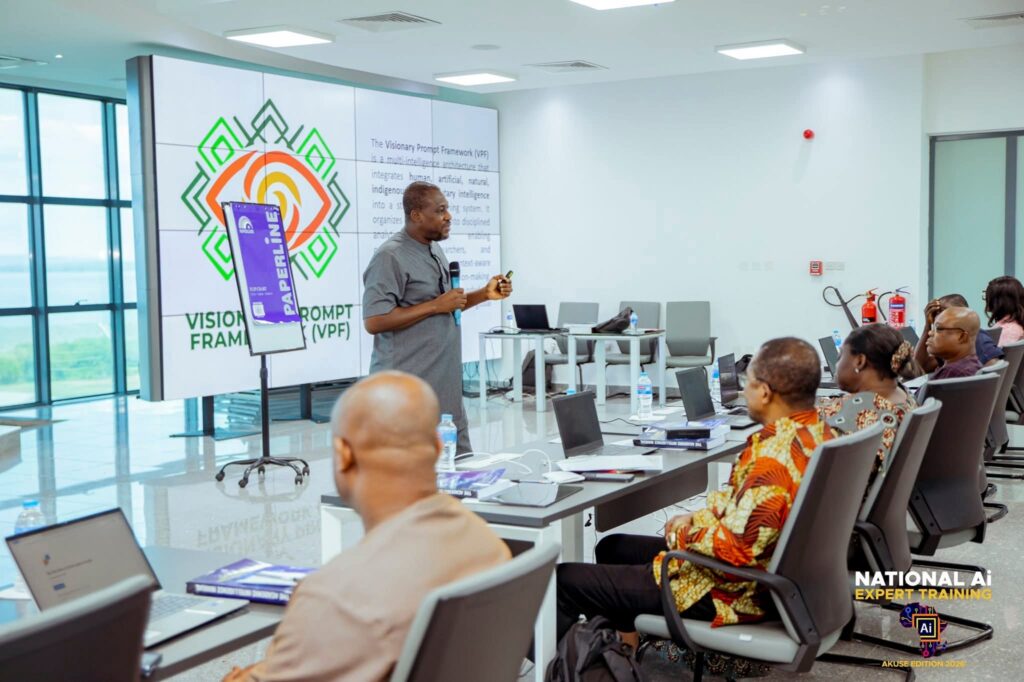
This direction was underscored at the National AI Expert Training Programme held in Akuse in the Eastern Region, from Monday, 16th to Friday, 20th March 2026, where the Administrator at the 24hr Economy Authority, Louis Quarcoo on behalf of the Presidential Adviser, Augustus O. Tanoh highlighted the growing role of AI in strengthening governance, improving institutional capacity, and enabling more effective decision-making.
Mr. Tanoh emphasized that Artificial Intelligence should be understood as a practical tool that complements human intelligence rather than replacing it.
AI is not magic, and it is not a substitute for human capability. It is a set of tools that enables institutions to think more clearly, act more coherently, and respond more effectively to real-world challenges, he stated.
The integration of AI forms a key component of the Government’s 24-Hour Economy Programme, which seeks to transform national productivity through coordinated planning, increased output, and stronger linkages across sectors.
Within this framework, AI is expected to enhance efficiency in critical areas such as agricultural planning, including irrigation management, yield modelling, aggregation systems, and the reduction of post-harvest losses.
The technology is also positioned to support logistics coordination, trade facilitation, customs processes, and the efficient movement of goods within domestic and regional markets.
Mr. Tanoh further noted that AI should not be treated as a standalone initiative, but as a cross-cutting capability that strengthens the integrated systems underpinning the 24-Hour Economy.
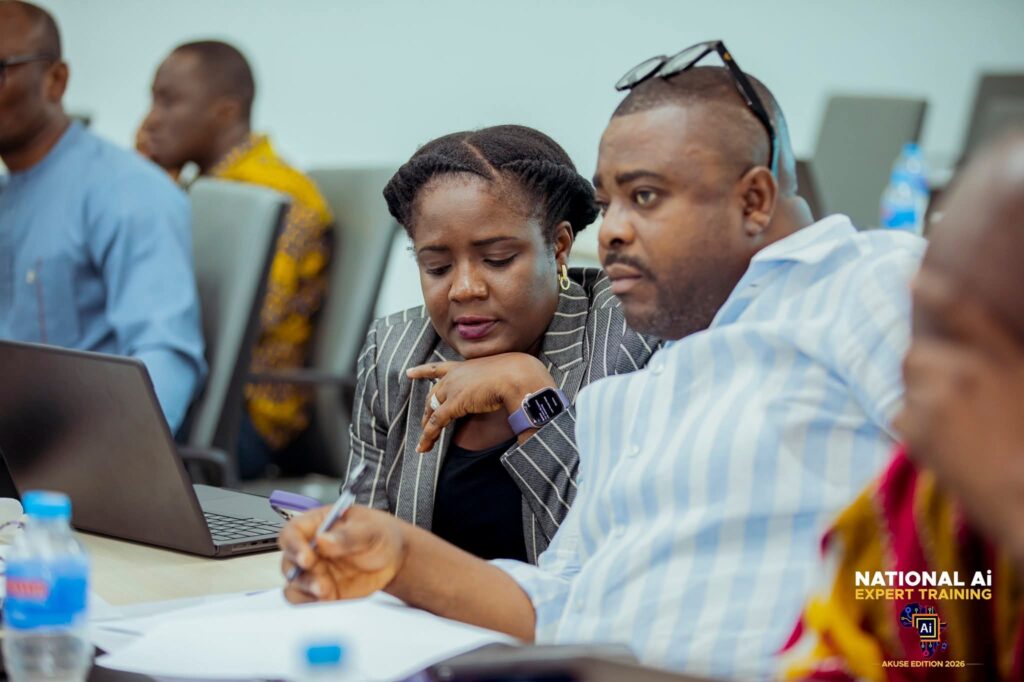
The National AI Expert Training Programme brought together public sector leaders to build practical knowledge and capacity for the responsible deployment of AI in governance and service delivery.
Mr. Tanoh concluded that connecting intelligence systems to production, logistics, skills development, finance, and markets will position Ghana to accelerate its digital transformation and compete more effectively in the global economy.
By Blessed EDUAMOAH DADZIE




0 Comments