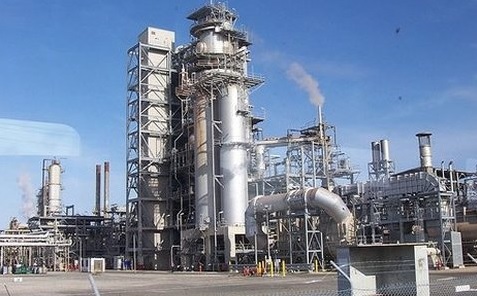
Ghana’s state-owned refinery, the Tema Oil Refinery (TOR), is preparing to significantly expand its crude processing capacity as management works to stabilise and deepen operations at the Tema-based facility.
Officials say the refinery is undergoing technical adjustments aimed at lifting its current throughput from 28,000 barrels per stream day to 45,000 barrels per stream day once ongoing integration works are completed.
Corporate Affairs Officer at TOR, Godwin Mahama Ayaba, explained that the refinery’s expansion strategy centres on activating an additional processing unit to complement the existing system.
Speaking in an interview on Citi Eyewitness News on Monday, 9 March, Ayaba said the refinery is in the process of integrating the F61 unit into its operations so it can work alongside the already functioning F1 unit.
He explained that both units will ultimately be connected to the refinery’s crude distillation unit, a move expected to raise output once the transition process is completed.
Ayaba indicated that since TOR announced the resumption of refining activities, production has continued while engineers simultaneously undertake technical work to bring the additional unit on stream.
According to him, once the integration is fully completed, the refinery’s operational capacity will increase from the current 28,000 barrels per stream day to about 45,000 barrels per stream day.
The TOR official also revealed that the refinery is currently functioning under a tolling framework, a system in which third-party companies supply crude oil to be refined.
Under this arrangement, TOR processes the crude and charges a processing fee, after which the refined petroleum products are returned to the companies that supplied the crude.
Ayaba stressed that the refinery does not control the distribution or marketing of the finished products under this system, as those decisions remain the responsibility of the crude suppliers.
While the immediate focus is on achieving the 45,000-barrel target, TOR’s longer-term ambition is to increase its throughput even further.
Ayaba noted that the refinery is exploring plans to expand its capacity to about 60,000 barrels per stream day in the medium term.
Meanwhile, concerns have also been raised within Ghana’s downstream petroleum sector following recent supply interruptions linked to technical system challenges.
Chief Executive Officer of the Chamber for Oil Marketing Companies (COMAC), Riverson Oppong, has called for stronger coordination between the country’s petroleum-related digital management systems.
Speaking on the same programme, Oppong clarified that the disruptions were not caused by the Integrated Customs Management System (ICUMS), as widely speculated.
Instead, he explained that the problem stemmed from technical issues with the Enterprise Relational Database Management System (ERDMS), which manages aspects of the petroleum import and distribution chain.
Oppong said the issue was quickly addressed, but the episode exposed weaknesses in the alignment between systems that handle import documentation and those responsible for depot offloading processes within the sector.










0 Comments