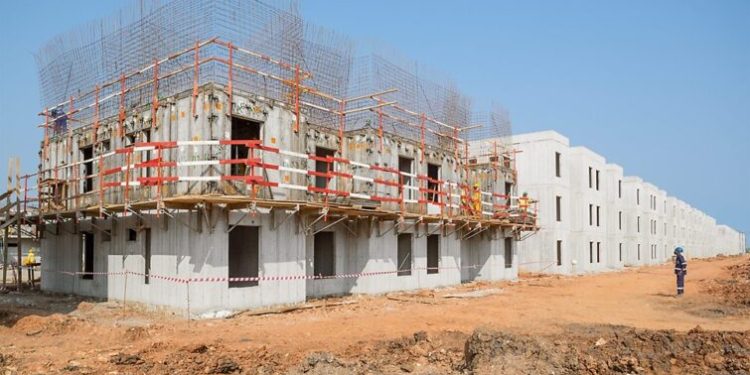
Ghana’s building construction inflation continued its steady decline in January 2026, dropping to 3.9% from 4.4% in December 2025, according to the latest Prime Building Cost Index (PBCI) released by the Ghana Statistical Service.
The PBCI, which tracks the cost of materials, labour, and equipment used in construction, stood at 132.4 in January 2026, up from 127.4 in the same month last year.
While overall inflation continues its downward trend, marking the ninth consecutive month of easing, month-on-month costs rose 1.1% from December 2025.
Labour costs contributed significantly to the slowdown, with year-on-year inflation falling to 5.4% from 10.7% in December. On a month-on-month basis, labour prices even declined by 4.1%, providing short-term relief for builders.
Plant and equipment costs also eased, with year-on-year inflation moderating to 4.2% from 5.6%, although monthly costs rose by 2.9%.
Materials inflation, however, showed upward movement, rising to 3.5% year-on-year from 2.7% in December, and increasing 2.3% month-on-month.
Surface finishes recorded the highest subgroup inflation at 10.8%, while cement prices fell by 6.6% compared to January 2025.
Other key contributors to rising costs included tiles, glazing, timber, doors, metal work, electrical works, and skilled labour, while subgroups such as fine aggregates and reinforcement, helped offset overall pressures.
The January data suggests that while easing labour and equipment costs are providing some relief, rising material prices could influence construction budgets in the coming months.









0 Comments