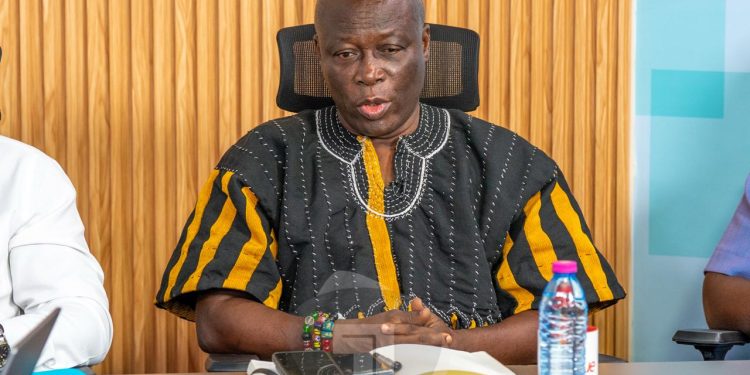
The National Coordinator for the District Road Improvement Programme (DRIP), Nii Lante Vanderpuye, has hailed the initiative for significantly reducing government expenditure on road rehabilitation.
DRIP was introduced under the administration of former President Nana Akufo-Addo to improve Ghana’s road network by decentralising road infrastructure development and addressing challenges facing Metropolitan, Municipal and District Assemblies (MMDAs) nationwide. Ghana travel guide
Speaking on The Big Issue on Saturday, February 7, Mr Vanderpuye explained that before the programme, minor roads in rural areas were usually awarded to contractors at high costs to the state.
He noted that with the provision of road construction equipment to assemblies under DRIP, MMDAs are now able to carry out road maintenance themselves at far lower costs.
“Before DRIP, small roads in our rural areas were given out on contract, and huge sums of money were paid to contractors. But today, because of the equipment, all that assemblies need is resources to buy diesel, laterite and fix the roads themselves
“One of the key issues people are not paying attention to is the fact that it has reduced the amount of money the government spends on road rehabilitation. DRIP is solving our problems and reducing the cost of government as far as road infrastructure is concerned,” he said.
As part of the programme, 2,240 units of road equipment, including motor graders, backhoes, rollers, wheel loaders, bulldozers, water tankers, concrete mixers, tipper trucks and low beds, were procured for distribution to all 261 MMDAs across the country.
The equipment was acquired through a collaboration between the District Assembly Common Fund (DACF) and the then Ministry of Local Government, Decentralisation and Rural Development.



0 Comments