
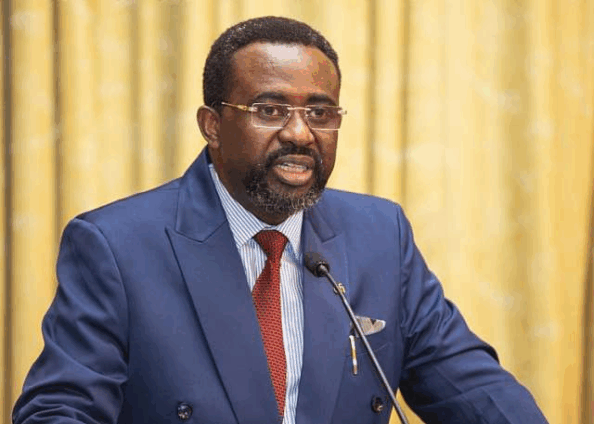
Urban Transport Planning Analyst, Dr Bernard Abeiku Arthur, has argued that Ghana cannot sustainably resolve its persistent urban transport challenges unless there is a clear and deliberate vision of the kind of cities the country intends to build.
According to him, transport solutions cannot be treated in isolation, but must flow from a broader understanding of urban purpose and function.
His comments come amid renewed public debate on Ghana’s urban transport systems, as commuters in cities such as Accra and Kumasi continue to grapple with congestion, long queues, and rising transport costs.
Speaking on the ongoing transport crisis affecting major cities on The Big Issue on Channel One TV on Saturday, January 17, 2026, Dr Abeiku stressed that city planning must begin with a clear identity and long-term vision.
“I want to state clearly that we need to know the kind of city we want to develop. Once we have a fair idea of the kind of city we want to develop, all other things, including governance, health infrastructure, education, and others, fit into that idea,” he said.
He noted that successful global cities are defined by clear economic and functional identities, which then shape their infrastructure and transport systems.
“When we talk about London, we all know that it is a major city for the international market. When we talk about New York, we know it is where the prices of goods around the world are determined. If you come to Africa and take South Africa, Johannesburg has a clear function it performs,” he explained.
However, Dr Abeiku questioned the lack of a clearly defined role for Accra beyond its status as Ghana’s capital.
“But when you come to Accra, what is the function of Accra, except to say that it is the gateway to Africa?” he asked.
He argued that the absence of a clearly articulated urban vision has contributed to uncoordinated development and reactive transport policies, which have failed to keep pace with population growth and urban expansion.
“So, we must be very clear. There must be a clear vision, and that vision will tell us the transport vision we are looking at,” Dr Abeiku said.
He further urged policymakers to rethink how transport problems are framed, stressing the need to distinguish between access and mobility.
“We should ask ourselves: is it access that we are looking at, meaning roads, or is it the movement of people that we want to address?” he queried.
Dr Abeiku explained that if access is the goal, transport planning must go beyond vehicular roads to include walkability, open public spaces, and properly planned urban layouts.
“If it is accessibility, then it includes walking, open spaces for sitting, and clear areas. We need to be very clear on this,” he added.








0 Comments