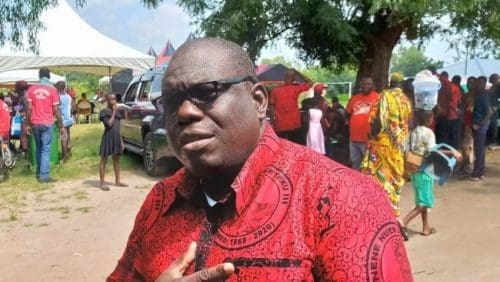
The Member of Parliament for Agotime Ziope, Charles Agbeve, has called on government to amend the Livelihood Empowerment Against Poverty (LEAP) programme to allow for the automatic enrolment of vulnerable widows.
He said the current eligibility framework excludes many widows who face severe economic and social hardship, despite qualifying in practice as some of the poorest members of society.
Speaking in an interview, Mr Agbeve stated that LEAP offers critical support, including free access to the National Health Insurance Scheme (NHIS), but argued that widows who are not captured under the programme are left without protection.
He questioned how such women are expected to meet basic healthcare needs when they fall outside the system, describing the situation as a major gap in Ghana’s social protection policy.
Mr Agbeve said the criteria used to define vulnerability under LEAP must be revised to better reflect realities at the community level. While the programme recognises groups such as persons with disabilities, indigents and mothers of multiple births, he argued that the definition of “indigent” is often too narrow and technical.
According to him, many widows clearly live in deprivation but fail to qualify because they do not meet the strict indicators used in assessments.
He proposed that widows should be prioritised once their status is confirmed, without being subjected to prolonged investigations. Verification by community leaders, including chiefs and assembly members, he said, should be enough to establish eligibility, particularly where widows struggle to support their children or meet basic living costs.
The MP also drew attention to the cultural and social pressures faced by widows, including stigma and practices that make remarriage difficult. He contrasted this with widowers, who he said are often able to remarry more easily, reducing their economic vulnerability.
Mr Agbeve warned that prolonged financial stress and uncertainty expose widows to serious health risks, including hypertension and other stress-related conditions. He said sustained government support, alongside interventions from non-governmental organisations, could significantly improve their wellbeing.
He concluded by calling for affirmative action in favour of widows within social protection programmes, describing it as both a moral obligation and a development necessity. He said strengthening support for widows would help protect families and communities and ensure that the most vulnerable women are not left behind.




0 Comments