





The government has revealed that it is targeting the expansion of coconut plantations in Ghana from the current 90,000 hectares to 180,000 hectares by 2028, as part of efforts to boost livelihoods and strengthen value chain development in the coconut sector.
According to the Office of the Presidential Initiatives on Agriculture and Agribusiness, the move is aimed at making the coconut industry more viable and competitive.
Ghana is currently the leading coconut producer in Africa and ranks among the top 12 producers globally, with an annual output of over 500,000 metric tonnes of fresh coconuts.
The sector supports the livelihoods of nearly 1.8 million people nationwide.
Under the Coconut Value Chain Development Initiative, government has so far distributed 3 million three-month-old coconut seedlings and other planting materials to more than 2,000 farmers across 11 regions.
This intervention, government says, has added 31,500 hectares of new coconut plantations to the existing 90,000 hectares nationwide.
Government has also indicated that it is going beyond the distribution of seedlings by building the capacity of beneficiary farmers.
The aim is to equip them with the requisite skills not only for production, but also for value addition and the sustenance of best agricultural practices.
Speaking at a Training and Capacity Building Programme for the Coconut Value Chain Development Initiative, the Director of Presidential Initiatives on Agriculture and Agribusiness, Dr Peter Boamah Otokunor, said the government, under President John Dramani Mahama, recognises that providing seedlings alone is not enough to transform the sector.
According to him, true transformation comes when farmers are empowered with the right knowledge and skills.
He said government is committed to ensuring that coconut farmers are trained in modern farming methods, proper planting techniques, effective farm management, pest and disease control, and, most importantly, how to treat farming as a business.
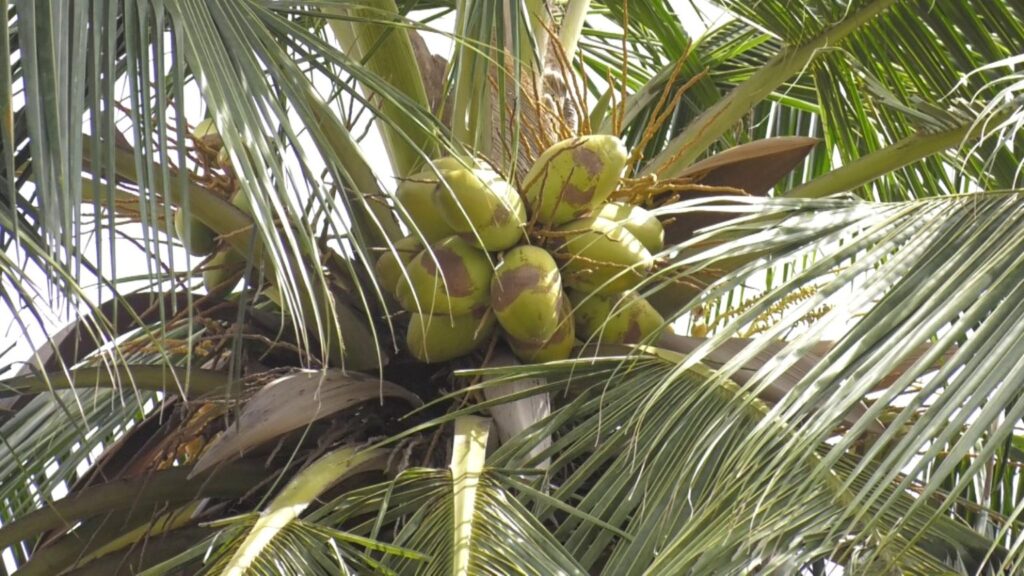
“This initiative has added 31,500 hectares of new coconut plantations to the existing 90,000 hectares across Ghana. The vision of the sector is that in the medium term—by the end of this term in 2028—the total coverage of coconut plantations in the country will be doubled from 90,000 hectares to 180,000 hectares,” Dr Otokunor stated.
He urged beneficiaries to take good care of the seedlings they have received and to serve as ambassadors of the initiative by returning to their communities to spread the message that agriculture is being supported, opportunities exist, and farming can be profitable.

Dr Otokunor also stressed the importance of value addition, noting that selling raw produce alone limits farmers’ incomes.
He encouraged farmers to explore ways to process, package, and brand their products, saying this significantly increases value and opens access to larger markets.
He commended the Ghana Exim Bank for its support in financing agribusiness and facilitating exports, describing its role as critical to the success of Ghanaian farmers.
He also praised the Coconut Federation of Ghana (COCOFEG) for its tireless efforts in organising and advocating for coconut farmers to strengthen the sector.
Project Manager of COCOFEG, Abdul-Rahman Tamimu, lauded the government’s intervention and described the support from Ghana Exim Bank as timely.

He said the initiative would significantly improve farmers’ livelihoods by addressing long-standing challenges such as low productivity and limited access to technical knowledge.
He added that the training programme will empower farmers to adopt improved farming practices, leading to higher incomes and better living standards.
The Deputy Manager for Projects at Ghana Exim Bank, Isaac Obeng Antwi-Arko, reaffirmed the Bank’s commitment to promoting agriculture and agribusiness as key pillars of national development.Ghanaian cultural products
Government has assured that it will continue collaborating with financial institutions such as Ghana Exim Bank and farmer organisations to further improve Ghana’s agriculture and agribusiness sectors.