


In a bid to tackle pressing challenges in agriculture, health, and industry, Ghana is leveraging artificial intelligence (AI) and nuclear science through an innovative partnership with the French Embassy.
The AI for Sustainable Development (AI4SD) project, involving the Ghana Atomic Energy Commission (GAEC) and Kwame Nkrumah University of Science and Technology (KNUST), is transforming cutting-edge research into practical solutions that benefit communities and inform policy.
Funded by the French Embassy, the initiative provides essential equipment, training, and infrastructure to local scientists.
A recent visit by French Embassy officials to GAEC’s facilities in Accra highlighted the project’s progress, showcasing how advanced technologies are being applied to real-world problems.
At the Acceleration Research Centre, the delegation inspected the Tandetron Accelerator, a key tool for analysing materials across various fields. Dr Christian Nuviadenu, manager of the facility, explained its versatility: “Here, we operate a Tandetron accelerator.
“It’s for research, education, and training. We specialise in probing materials to know their content. So those materials can have interest in different fields of application, in medicine, food and drugs, archaeology and cultural heritage.”
He added: “We work for mines and also for food and drugs, look at food composition with respect to contaminations, work on soil and sediment on plants, etc.”
The tour also included the Ghana Research Reactor-1 Centre, a compact 34-kilowatt facility primarily used for neutron activation analysis, research, and training. Converted from high-enriched to low-enriched uranium in 2017, the reactor ensures safety while supporting vital scientific work. 0 “LARGE”
Dr Kwame Gyamfi, a researcher at the reactor, noted: “This 34-kilowatt reactor is mainly used for neutron activation analysis. In 2017, it was converted from high-enriched to low-enriched uranium.”
GAEC’s efforts extend to calibrating radiation equipment for medical and industrial use. Daniel Adjei, an assistant research scientist, described their role: “We calibrate medical and industrial radiation equipment to ensure accurate measurements. This is a secondary laboratory compared to our primary detector.”
“Our services include supporting, for example, health facilities where the radiation is used for medical imaging. In the extractive industry, some mining companies use radiation sources for some of their processes. And so we calibrate all of that equipment to make sure that they are measuring the quantity of radiation that they are measuring,” he elaborated.
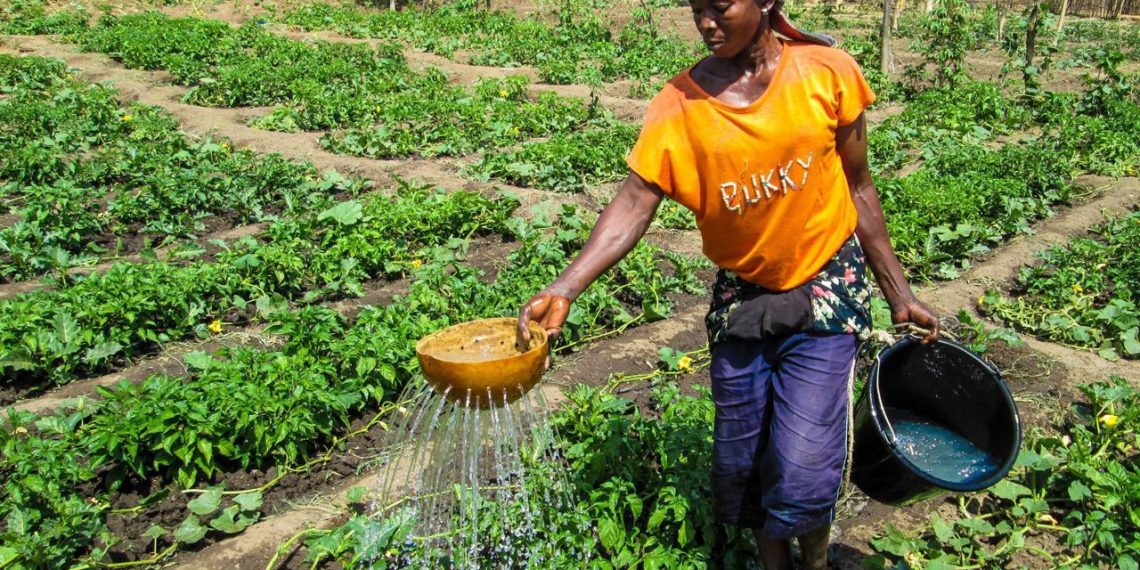
Following the lab visits, discussions with GAEC scientists focused on AI’s role in agriculture. Kofi Asare, manager at the Remote Sensing and Climate Centre, highlighted how satellite imagery and AI models assist farmers: “AI helps farmers monitor crops and manage droughts, improving yields in northern Ghana and Bono East.” 1 “LARGE.”Ghanaian food recipes
The project has equipped an AI lab with computers and resources to support evidence-based studies for government ministries. Prof. Francis Hasford, director of the Radiological and Medical Sciences Institute, said: “Support from the French Embassy allows us to equip the AI lab and back studies with evidence for government ministries.”
Elisabeth Morzadec, project coordinator for AI4SD, emphasised the initiative’s broader aims, stressing how the program intends to strengthen Ghana’s AI ecosystem
“We want to strengthen the AI ecosystem and highlight our partners’ work as the project reaches its midpoint.”
By combining nuclear science, AI, and local expertise, AI4SD is fostering sustainable development in Ghana. This collaboration not only addresses immediate challenges but also builds a robust research ecosystem, ensuring long-term benefits for policy, industry, and communities across the nation.
