

School authorities and student beneficiaries of the World Food Programme’s (WFP) fortified rice initiative in the Ashanti Region have said that the intervention has achieved remarkable success, with many calling for fortified rice to become the primary type of rice supplied to schools under the feeding programme due to its nutritional benefits.
The rice fortification programme, introduced by the United Nations World Food Programme in both public and private schools, seeks to address long-standing micronutrient deficiencies in populations that rely heavily on rice as a staple food.
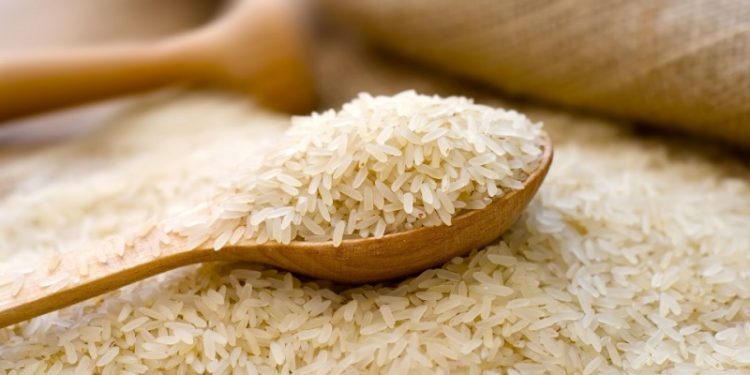
The process involves adding essential vitamins and minerals to locally produced Ghanaian rice, either during milling or through heat extrusion.
The initiative is being implemented with funding support from the Foreign, Commonwealth and Development Office (FCDO), dsm-firmenich in collaboration with key government partners, including the Ghana School Feeding Programme under the Ministry of Gender, Children and Social Protection, the Ghana Education Service, the Ghana Health Service, and Women in Agriculture Development.
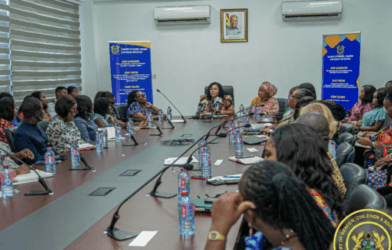
At Ejisu Senior High/Technical School in the Ashanti Region, Headmistress Grace Asamani highlighted the nutritional value of the fortified local rice, noting that initial resistance from students was overcome through sensitisation.
She explained that although students were hesitant at the beginning because it was local rice, continuous education on its health benefits led to full acceptance. Madam Asamani added that at a time when the school was responsible for purchasing its own food supplies, they bought fortified local rice from a WFP-accredited supplier.
However, since the government now supplies the rice centrally, the school no longer has control over procurement.
She stressed that the school would prefer fortified rice to the regular rice currently supplied, describing it as richer in essential nutrients compared to ordinary rice, which lacks key micronutrients.
According to her, “Our local rice has a lot of benefits so I would say that if we adopt it will help us because if you look at the nutritional value and other things that are related to it I think it will help especially with regards to the nutrition of students so it’s a good thing for us to eat what we grow in Ghana.”
Students at the school, Owusu Edna Beauty and Adjei Kwame Christian, also supported the call, saying consuming fortified rice keeps them healthy and better focused on their studies.
On the regional impact of the programme, the Ashanti Regional School Health Education Coordinator, Reverend Emmanuel Addo, revealed that several schools across the region have benefited from the intervention, with significant health improvements recorded.
According to him, since the introduction of fortified rice, cases of anaemia linked to poor diet among students have drastically reduced, with no recent records of anaemia in beneficiary schools.
He added that the impact of the programme is being strengthened through complementary nutrition-friendly initiatives, including designated days for students to consume fruits and vegetables, which have further improved overall nutrition in schools.
According to Rev Addo, “cases of anaemia among students have reduced since the programme began, and nutrition-friendly activities have been introduced in schools. Government should fortify and polish local rice supplied to schools to ensure students receive the nutrients they need while promoting what Ghana produces.”
Reverend Addo urged the government to fully integrate food fortification into its food supply interventions under the Ghana School Feeding Programme.
Nationally, the World Food Programme says the fortified rice initiative targets 157,510 students in public schools, made up of over 111,000 basic school pupils and more than 46,000 senior high school students.
In the pilot phase, WFP partnered with the Ghana Education Service and the Ghana School Feeding Programme to select 365 basic schools and 35 senior high schools across 12 districts in six regions, including Ashanti, Upper East, Upper West, Northern, Oti and Greater Accra.
To strengthen local production and ensure sustainability, WFP has invested in building rice fortification capacity by procuring and installing fortification equipment valued at over 80,000 US dollars for rice millers, including Franco Food Processing and Farms in the Ashanti Region.
The programme also supplied over 60 metric tonnes of fortified rice kernels to support production for school feeding.
In 2025 alone, rice millers in the Ashanti and Upper East Regions supplied more than 170 metric tonnes of fortified rice to selected senior high schools, while additional production is underway for private schools and vulnerable groups, including pregnant and breastfeeding women.
The initiative has also been extended to low-fee-paying private schools in deprived communities, reaching nearly 59,000 pupils so far and contributing to increased school enrolment.
While stakeholders continue to support the consumption of locally produced fortified rice, they are appealing to local rice processors and farmers to improve processing standards, particularly by removing stones and husks, which remain a major challenge with local rice.
The World Food Programme and its partners said the fortified rice initiative shows strong potential to improve child nutrition, enhance learning outcomes, and strengthen local food systems, as discussions continue on scaling up and making fortified rice a standard component of school feeding nationwide.