


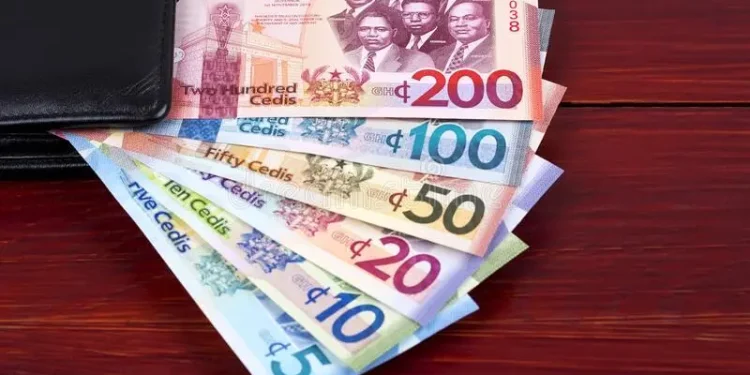
Despite the recent short-term gains, the Ghana cedi is expected to face near-term pressures stemming from early import demand and the unwinding of year-end foreign exchange (FX) buffers, which could constrain supply.
Over the past fortnight, the cedi has recovered some of its earlier losses, buoyed by relatively subdued FX demand across both interbank and retail markets.
In the interbank segment, the Cedi appreciated by 3.74% against the US dollar, closing at a mid-rate of GHS 10.70/USD. The British pound and euro similarly strengthened, rising 4.27% and 4.81% to GHS 14.38/GBP and GHS 12.47/EUR, respectively.
In the retail market, the cedi recorded gains of 1.65% against the dollar, 2.49% versus the pound, and 2.85% relative to the euro, closing at GHS 12.15/USD, GHS 16.05/GBP, and GHS 14.05/EUR.
Databank Research notes that the potential impact of upcoming FX pressures is likely to remain moderate, as market participants anticipate the gradual disbursement of the USD 1 billion allocated for January 2026 under the FX Intermediation Programme.
External factors may also influence currency movements. Recent tensions involving the US Federal Reserve and former President Trump over the investigation into Jerome Powell could exert a modest softening effect on the US dollar in the near term.
Nevertheless, domestic demand dynamics are expected to remain the primary determinant of the cedi’s performance.